
AI Co-Pilots, Fused Selves, and the Future Workforce: Why Value Hierarchies Will Define Corporate Survival
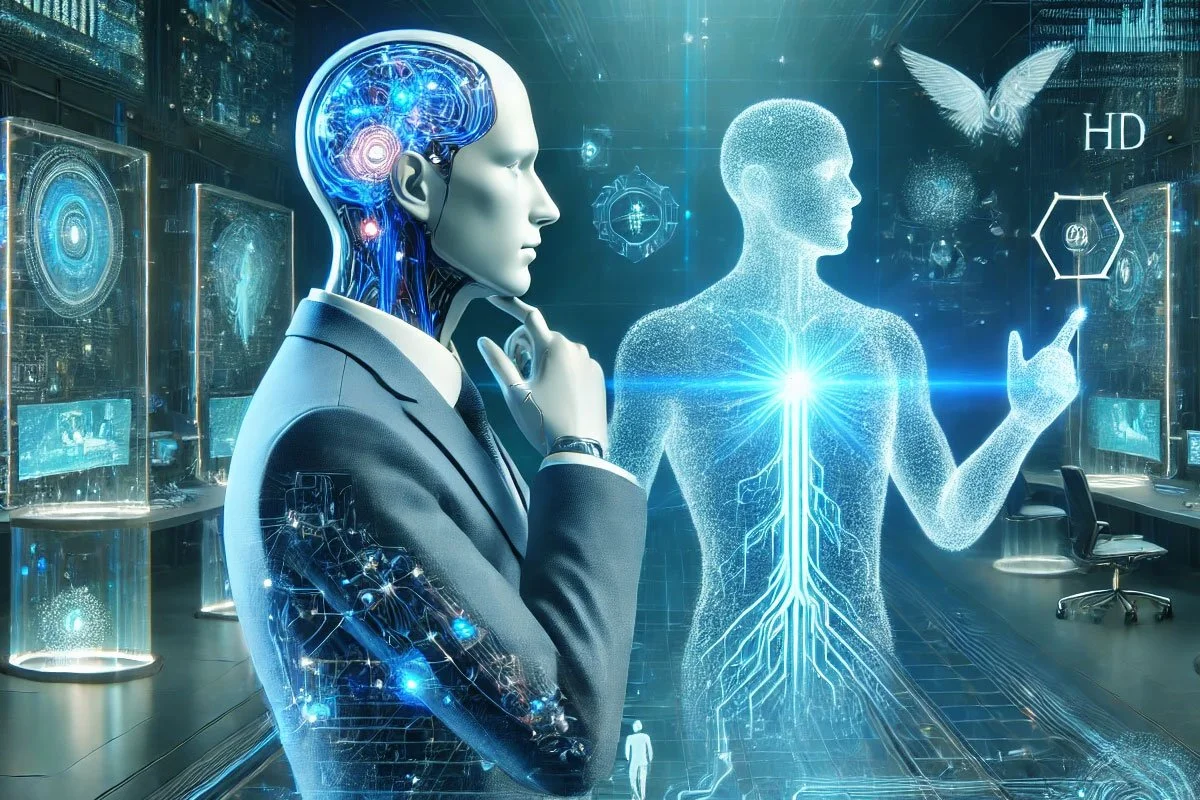
As artificial intelligence (AI) continues to integrate into the workforce, the traditional boundaries of human labor are dissolving. AI-powered co-pilots are increasingly taking over routine and even complex cognitive tasks, raising urgent questions about the role of human intelligence, decision-making, and long-term corporate strategy. While AI dramatically enhances productivity, it also amplifies a growing divide between those who can effectively collaborate with AI and those who will be displaced by it.
This transformation is giving rise to the "Fused Self" — a hybrid existence where human employees function alongside AI counterparts, continuously evolving in an era of augmented intelligence. However, the true determinant of professional and corporate success will not be intelligence alone but the ability to operate within a structured moral and value-based framework.
This article explores why AI cannot replace ethical reasoning, the critical role of Structured Internal Value Hierarchies (SIVHs) among key decision-makers (KDMs), and the Corporate Value Architecture (CVA) needed to sustain long-term growth. The conclusion is clear: The winning formula for the future workforce is IQ + sustainable moral values, communicated and distributed through a structured corporate hierarchy. Organizations that fail to establish a coherent, structured ethical framework will face an inevitable decline, while those that successfully integrate human intelligence, AI augmentation, and hierarchical moral reasoning will lead the next era of corporate success.
Surprising data from Europe
The European Union has recently observed an influx of over two or even three million individuals entering the job market, a figure that surpasses expectations based on retirement and other workforce exits. This trend underscores the evolving dynamics of employment, particularly in the context of artificial intelligence (AI) integration and the role of human intelligence.
Recent data from Eurostat indicates that between the second and third quarters of 2024, approximately 3.1 million unemployed individuals in the European Union transitioned into employment. This significant movement within the labor market highlights the dynamic nature of employment in the EU. Additionally, migration has played a crucial role in shaping the EU labor market. For instance, Germany experienced a net population increase of over 3.5 million people from 2014 to 2024 due to migration, underscoring the impact of migration on workforce demographics.
These developments underscore the evolving dynamics of the European labor market, influenced by both internal transitions and external migration.
The Role of AI in Enhancing Productivity
Generative AI has been lauded for its ability to boost productivity, especially in tasks involving large volumes of textual data. Studies indicate that AI can automate routine tasks, allowing employees to focus on more complex aspects of their roles, thereby enhancing overall efficiency. For instance, research has shown that generative AI tools can increase business users' throughput by 66% when performing realistic tasks.
The Immutable Nature of IQ
While AI facilitates horizontal skill expansion, it's crucial to recognize the limitations imposed by an individual's Intelligence Quotient (IQ). Research consistently shows that IQ is a significant predictor of job performance, particularly in complex roles. However, it's important to note that IQ is a stable trait, resistant to change through external tools or interventions. A study published in Intelligence found that IQ scores are relatively stable over time and are strong predictors of academic and job performance.
Here are just some of the studies that have examined the stability of Intelligence Quotient (IQ) scores over time and their predictive validity concerning academic and job performance:
Schneider (2014). In a comprehensive literature review on the stability of intelligence, Schneider noted a broad consensus that while the stability of cognitive ability varies with age, it remains relatively high from school age onward. This stability underscores the reliability of IQ as a consistent measure over time, and the inabolity of AI to increase it.
Deary et al. (2004). This longitudinal study investigated the stability of IQ scores from childhood to old age. The findings revealed a significant correlation between IQ scores measured at age 11 and those at age 80, indicating that intelligence remains relatively stable across the lifespan.
Schmidt and Hunter (1998). In their meta-analysis, Schmidt and Hunter found that general mental ability (GMA), often assessed through IQ tests, is a strong predictor of job performance across various occupations. They reported an average validity coefficient of 0.51 for GMA concerning job performance, highlighting the importance of cognitive ability in professional settings.
Kuncel, Hezlett, and Ones (2004). This study examined the relationship between cognitive ability and academic performance. The researchers found that higher cognitive ability, as measured by standardized tests, was strongly associated with better academic outcomes, including higher grades and degree attainment.
Hunter and Hunter (1984). In their research, Hunter and Hunter demonstrated that cognitive ability tests are among the best predictors of job performance, especially for complex roles. They emphasized that individuals with higher cognitive abilities tend to acquire job knowledge more rapidly, leading to superior performance.
Collectively, these studies provide robust evidence supporting the stability of IQ scores over time and their significant predictive validity concerning both academic achievement and job performance.
What exacrtly does the 0.51 correlation mean?
A validity coefficient of 0.51 for General Mental Ability (GMA) in predicting job performance is a remarkably strong correlation, especially in the field of social sciences, where correlations above 0.3 are already considered meaningful.
To put this into perspective
IQ and Job Performance (r = 0.51)
This means that IQ accounts for approximately 26% of the variance in job performance.
While this may not sound like an overwhelming number, it is one of the strongest known predictors of success across different jobs.
Comparison to Other Well-Known Correlations
To understand the significance of r = 0.51, let’s compare it to other commonly accepted relationships in everyday life:
Smoking and Lung Cancer (r ≈ 0.40-0.50): One of the most well-known medical risk factors.
Height and Basketball Performance (r ≈ 0.30-0.40): Taller players tend to perform better in basketball, but this correlation is weaker than IQ and job performance.
SAT Scores and College GPA (r ≈ 0.35): Standardized test scores like the SAT or ACT predict how well students will perform in college, yet the correlation is weaker than IQ’s prediction of job performance.
The Effect of Training on Job Performance (r ≈ 0.25): Even formal training in the workplace is a weaker predictor of success than raw cognitive ability.
Why This Matters
A correlation of 0.51 suggests that intelligence plays a crucial role in learning new skills, solving problems, and adapting to new work environments.
Even though other factors like personality, motivation, and experience influence job performance, no single factor predicts success in as many different jobs as IQ does.
This explains why companies that rely on cognitive ability testing in hiring tend to have better long-term employee performance.
Bottom Line
An IQ-job performance correlation of 0.51 is exceptionally strong when compared to other known relationships in science and business. It confirms that intelligence is a key factor in workplace success—more predictive than even experience or formal training.
IQ Corridors and the Limits of AI-Driven Enhancement
The Concept of "IQ Corridors" and Standard Deviations
The term "IQ corridors" refers to the range of cognitive ability within which an individual operates, largely determined by their IQ standard deviation (SD) from the population mean (typically set at 100, SD = 15). This concept is based on the normal distribution of IQ, where most people (about 68%) fall within one standard deviation (85–115 IQ), while individuals with significantly higher or lower intelligence are progressively rarer.
Individuals with an IQ below 85, which represents about 16% of the population, tend to struggle with complex reasoning and learning, often requiring structured assistance. Those with an IQ in the 85–100 range (low average to average, about 34% of the population) are competent in routine tasks and benefit from clear instructions but may have limited ability to innovate. The IQ range of 100–115 (average to high average, also about 34%) includes individuals who learn new information at a reasonable pace and are capable of moderately complex problem-solving. In the 115–130 range (high average to superior, about 13%), individuals tend to be fast learners, with strong problem-solving skills and the ability to adapt and create new strategies. Those with an IQ above 130 (gifted and above, representing about 2%) are exceptionally fast abstract thinkers with high adaptability and strong self-learning capabilities.
Thus, within each IQ corridor, individuals may maximize their potential within that range, but moving beyond it is not possible—no amount of AI assistance can increase innate cognitive ability.
AI’s Role in Enhancing Horizontal Knowledge Within IQ Corridors
AI tools like ChatGPT, LLM-based assistants, and workflow automation tools significantly enhance knowledge acquisition and productivity, but they operate within the cognitive range that an individual is naturally capable of utilizing.
AI expands the horizontal scale by providing rapid access to vast amounts of information, pattern recognition, and automation. However, AI does not increase fundamental problem-solving ability, processing speed, or abstract reasoning, which are core to GMA (General Mental Ability).
For example, a person with an IQ of 105 may use AI to learn coding, enhance efficiency, and solve more complex problems within their cognitive range — but they will never reason, strategize, or conceptualize like someone with an IQ of 140, no matter how much AI assists them.
This aligns with Arthur Jensen’s (1998) theory of intelligence, which posits that G (general intelligence) is largely heritable and stable over time. Research has repeatedly shown that IQ remains largely unchanged after early adulthood, with heritability estimates ranging from 50% in childhood to 80% in adulthood (Plomin & Deary, 2015).
Empirical Research on the Stability of IQ
Several longitudinal studies confirm that IQ remains stable over time, reinforcing the notion that AI cannot fundamentally alter cognitive capacity. In addition to the research mentioned before in this aerticle, the following can be pointed out.
Deary et al. (2004) conducted a longitudinal study following individuals for over 60 years and found IQ scores remained highly consistent from childhood to old age.
Johnson et al. (2009) found that environmental interventions (e.g., education, training, exposure to knowledge) can improve domain-specific skills but do not increase general intelligence.
Ritchie & Tucker-Drob (2018) emphasized that while education can enhance crystallized intelligence (knowledge-based learning), it has minimal impact on fluid intelligence (problem-solving ability and abstract reasoning).
AI's Limitations: Expanding Capabilities vs. Expanding Intelligence
While AI provides unparalleled access to information, automation, and rapid learning, its impact is limited by cognitive ceilings. AI enhances efficiency, reduces cognitive load, and aids in knowledge retention. However, AI does not fundamentally alter working memory, abstract reasoning, or processing speed—all of which are core to General Intelligence (G).
The Hard Ceiling of IQ and the Illusion of AI-Based Intelligence Enhancement
No matter how extensively an individual leverages AI, their cognitive architecture remains fixed within their IQ corridor. The intelligence they were born with defines:
The level of abstraction they can handle.
The speed at which they process information.
Their ability to solve novel problems.
AI enables individuals to optimize their performance within their IQ range, but it does not grant them access to higher cognitive domains they were not naturally equipped to operate within. This is a crucial distinction that policymakers, HR professionals, and businesses must recognize when assessing workforce potential in the age of AI.
Thus, while AI accelerates knowledge acquisition and task execution, it does not — and cannot — increase intelligence itself.
Fused Selves: AI as a Co-Pilot in the Workforce
The integration of artificial intelligence (AI) tools across various professions has fostered a symbiotic relationship between human workers and AI "co-pilots." This collaboration enhances productivity and reshapes job roles, with varying impacts based on individual skill levels.
A study by Brynjolfsson et al. (2023) examined the deployment of a generative AI-based conversational assistant among over 5,000 customer support agents. The findings revealed a 14% average increase in productivity, measured by the number of issues resolved per hour. Notably, novice and low-skilled workers experienced a 34% improvement, while experienced and highly skilled workers saw minimal impact. This suggests that AI tools can disseminate best practices and accelerate the learning curve for less-experienced employees.
However, the effectiveness of this human-AI partnership often correlates with the human participant's skill level. For individuals with lower skill levels, AI may outperform in certain tasks, potentially leading to job displacement. Conversely, those with higher skills can leverage AI to augment their capabilities, leading to enhanced productivity and job security. This dynamic underscores the importance of continuous skill development to maximize the benefits of AI integration.
The Matthew Principle in the Modern Job Market
The Matthew Principle, encapsulated by the phrase "the rich get richer, and the poor get poorer," is increasingly evident in the modern job market, particularly concerning AI integration. A segment of the workforce is reaping significant benefits from AI, while a larger portion faces challenges, exacerbating existing inequalities.
The International Monetary Fund (IMF) has noted that AI could affect income and wealth inequality within countries. Workers who can harness AI may see an increase in their productivity and wages, while those who cannot may fall behind. This polarization within income brackets highlights the need for targeted interventions to ensure equitable opportunities across the workforce.
Moreover, the IMF's analysis indicates that AI could impact almost 40% of global employment, with advanced economies experiencing higher exposure due to the prevalence of cognitive tasks. This exposure underscores the necessity for policies that support workers in adapting to AI-driven changes, such as reskilling programs and comprehensive social safety nets.
In summary, while AI offers substantial productivity gains, it also presents challenges related to workforce displacement and income inequality. Addressing these issues requires proactive measures to ensure that the benefits of AI are broadly shared across all segments of society.
The Unutilized IQ Corridor: AI Counterpart taking over the Fused Selves
A growing and alarming trend is emerging in the workforce — many individuals are not even utilizing the full breadth of their own cognitive abilities, leading to an inevitable consequence: AI will replace them. The issue is not just AI advancing too quickly, but rather human workers failing to expand within the intellectual "corridor" determined by their IQ. This corridor, defined by standard deviations, represents the range within which an individual can meaningfully expand their knowledge and problem-solving capabilities. The problem is not just about raw intelligence but about whether a person is maximizing the full potential of their cognitive capacity.
A striking example of this phenomenon occurred on a TV quiz show, where a "money laundering detection expert" (Anti-Money Laundering Analyst) from a major bank found herself struggling with a seemingly elementary question: "In which century did man land on the Moon?" Instead of recalling basic historical knowledge, she relied to an extent on facial cues from the host, hesitating between the 18th and 19th centuries before ultimately choosing the latter.
This is not about mocking an individual — it is about recognizing a systemic issue in how professionals, even in critical industries, fail to expand their knowledge base beyond the most immediate requirements of their job. The concern is not that someone may lack trivia knowledge, but that individuals with cognitively demanding job titles are failing to operate even at the mid-range of their own IQ corridors.
Why This Matters: The AI Displacement Factor
In an AI-driven job market, workers who fail to maximize their cognitive range will inevitably be replaced. AI does not "get lazy," "miss the basics," or "fail to expand its knowledge scope." Unlike humans, AI does not rely on "reading the room" when confronted with a problem — it follows logic, probability, and vast databases of factual knowledge.
The example above is emblematic of a broader pattern: many professionals are not just being displaced by AI because of automation, but because they are failing to operate at the level their own intelligence permits. If individuals do not push the boundaries of their knowledge and reasoning abilities within their IQ corridors, they are actively contributing to their own obsolescence.
This reinforces the importance of AI literacy — not just in terms of how to use AI tools, but in understanding that AI will seamlessly outperform individuals who do not exercise their full cognitive range. The failure to expand within one's corridor is not just an individual issue — it is a systemic crisis that will define who remains relevant in the evolving workforce.
The Irreplaceable Role of Human Morality in Corporate Decision-Making
As artificial intelligence (AI) continues to reshape the workforce, organizations face an increasing challenge: determining where AI can enhance efficiency and where human decision-making remains indispensable. One of the most critical limitations of AI lies in moral and ethical decision-making. AI can process vast amounts of data, automate complex workflows, and even simulate human conversation, but it fundamentally lacks the capacity for conscious moral reasoning — the ability to distinguish right from wrong based on intrinsic values rather than programmed rules. This deficiency has profound implications for corporate governance, leadership, and long-term strategic decision-making.
While AI can assist in risk assessment, fraud detection, and operational optimization, it cannot provide the moral compass required for leadership. Decision-making in high-stakes environments — such as regulatory compliance, corporate responsibility, ethical hiring, and crisis management—demands more than pattern recognition and algorithmic efficiency. It requires a hierarchically structured moral framework that only humans, particularly Key Decision Makers (KDMs), can construct, refine, and enforce.
A report by the Brookings Institution highlights that AI is ultimately a tool that requires human oversight, especially when handling ethical dilemmas. AI models can detect inconsistencies, predict market trends, and optimize logistics, but they cannot weigh moral consequences, assess fairness, or balance conflicting human interests. In the absence of an internal moral structure, AI will always default to mathematical optimization rather than ethical judgment. This is precisely why corporate success hinges not just on AI adoption but on aligning the Structured Internal Value Hierarchies (SIVHs) of key employees with the company's long-term vision.
Why Structured Internal Value Hierarchies (SIVH) Matter for Decision-Making
A fundamental challenge in corporate leadership is not simply defining "good" values but ensuring that values are organized in a hierarchical structure. In many companies, values are presented as a list — integrity, innovation, customer satisfaction, sustainability — without a clear sense of prioritization. This creates internal contradictions and operational inefficiencies when leaders must choose between competing values in difficult situations.
For instance, should a company prioritize customer satisfaction over profitability? Should employee well-being take precedence over market expansion? The reality is that not all values hold equal weight in every decision. Without a structured value hierarchy, corporate leadership becomes reactive rather than strategic. A well-defined SIVH among KDMs ensures that the organization has a clear guiding framework for resolving moral dilemmas and maintaining corporate integrity.
Research in moral psychology and leadership studies (Haidt, 2012; Treviño & Brown, 2004) shows that leaders with a well-defined moral hierarchy are significantly better at making ethically sound decisions under pressure. They are less prone to cognitive dissonance, less likely to succumb to short-term incentives, and more capable of steering their organizations toward sustainable success.
Moreover, executive decision-making studies have confirmed that companies where KDMs have a strong alignment between personal ethics and corporate strategy tend to have higher employee trust, lower turnover, and greater resilience during crises (Liedtka, 2008; Giessner & van Knippenberg, 2008). This reinforces the need for organizations to not only define values but to ensure they are structured, ranked, and consistently communicated through Corporate Value Architecture (CVA).
The Long-Term Success of Moral Values and Corporate Value Architecture (CVA)
The foundation of any enduring corporate success lies in maximizing the potential of employees within their IQ corridors while ensuring that AI integration enhances rather than replaces human capability. AI co-pilots offer an unprecedented opportunity for individuals to expand their horizontal knowledge base, automate repetitive tasks, and enhance their productivity. However, this expansion is only as effective as the motivation and internal drive of the individual using these tools.
This is where Structured Internal Value Hierarchies (SIVHs) and a properly designed Corporate Value Architecture (CVA) play a crucial role. When employees are placed in career paths that align with their intrinsic values, they are far more likely to maximize their intellectual capacity, utilize AI effectively, and continuously strive for improvement. Companies that fail to embed strong, meaningful value structures within their workforce risk stagnation, as employees will lack the intrinsic motivation to push beyond basic competence and develop new skill sets.
This principle extends beyond just individual performance — it affects the collective cognitive and cultural development of an organization. If the work environment does not challenge individuals to pursue intellectual growth and critical thinking, employees may remain intellectually stagnant despite the availability of AI tools. A poorly structured CVA not only fails to elevate employees but can also subtly contribute to cognitive degradation over time, reinforcing mediocrity and intellectual complacency.
Take, for example, the case of a bank's anti-money laundering expert struggling on a televised quiz show to determine whether humans landed on the moon in the 18th or 19th century. While this anecdote may appear to be a personal failure, it is also an indictment of the corporate value structure under which that employee operated. Most individuals spend the majority of their awake hours at work, shaped by the environment, expectations, and intellectual culture of their workplace. If that workplace does not actively promote continuous learning, intellectual engagement, and structured critical thinking, even those in positions requiring analytical expertise may fail in areas that demand basic cognitive reasoning and historical literacy.
Thus, the true competitive advantage of the future workforce will not be determined solely by IQ or AI accessibility but by the fusion of intelligence, value-driven motivation, and a well-structured corporate environment. Organizations that consciously cultivate a culture where employees are motivated to explore their full intellectual potential within the right moral and value-based framework will thrive. Those that neglect this foundational structure will find themselves replacing employees at an increasing rate, only to face the same stagnation and inefficiency in every new hire.
In the end, AI can provide knowledge, but only structured moral hierarchies and corporate value alignment can provide direction.
