
SIVHs as the Basis for Effective Teamwork
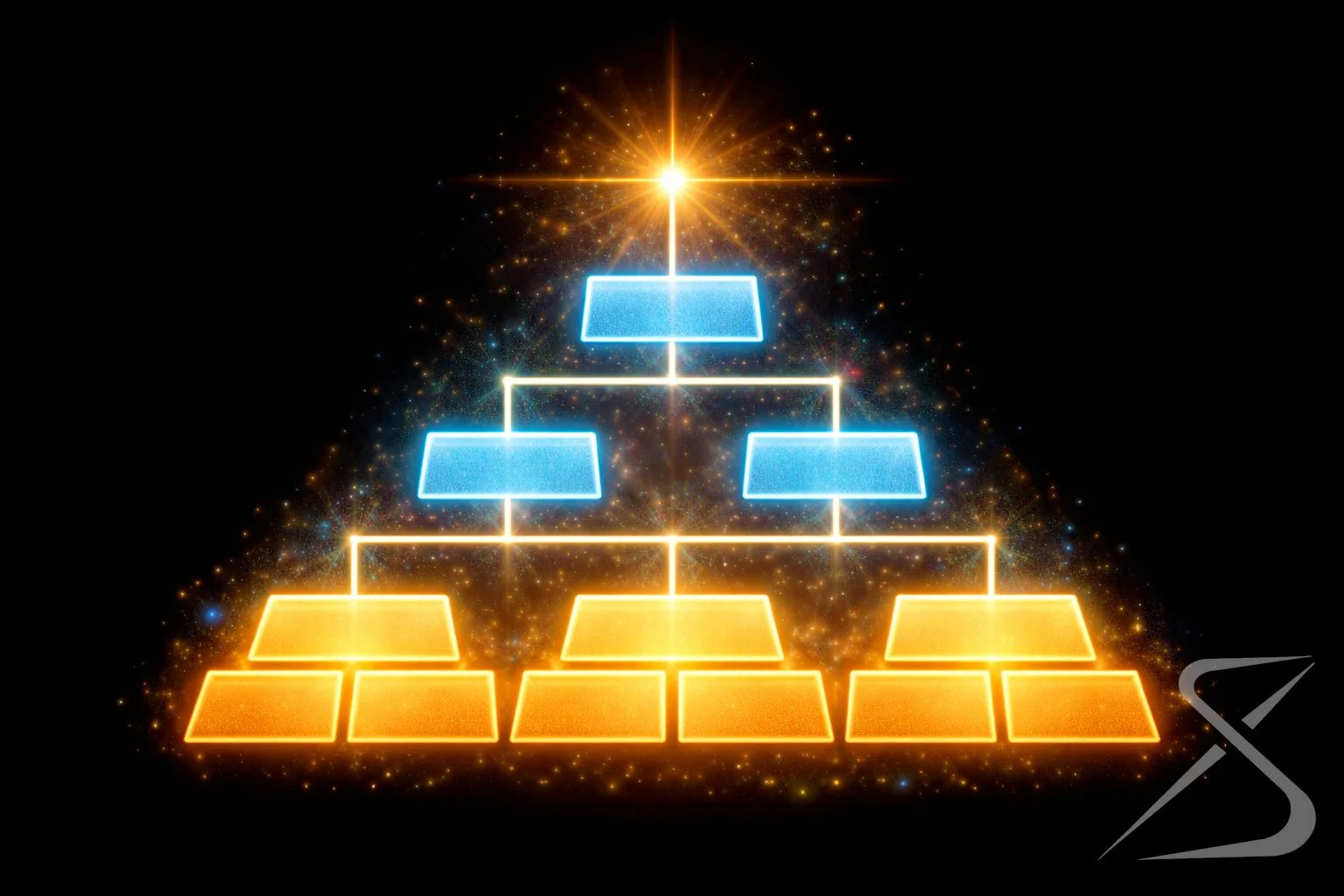
In today’s corporate environment, effective teamwork is not merely a matter of assembling highly skilled individuals; it depends on whether collaboration is structured, resilient, and grounded in shared values. While HR departments typically assess team performance through skill alignment and surface-level trust indicators, growing evidence suggests that deeper internal value hierarchies play a far more decisive role in sustaining long-term collaboration and resilience under pressure.
At SelfFusion, we have developed a third-level team effectiveness analysis that extends beyond conventional HR methodologies. By identifying and aligning the internal value hierarchies within teams, we offer organizations a scientifically grounded framework for strengthening trust, increasing operational efficiency, and securing long-term organizational stability.
This article examines the critical role of internal value structures in team dynamics, explains why traditional HR approaches often fall short, and outlines how SelfFusion’s approach is reshaping collaboration and organizational performance.
The Problem: HR Lacks Scientifically Valid Tools to Measure Team Collaboration Effectiveness
HR departments often rely on subjective assessments and general personality tests to evaluate team effectiveness. However, scientific research suggests that structured internal value hierarchies, cognitive adaptability, and perceived locus of control are far stronger predictors of crisis resistance and cooperation (Bonanno et al., 2011; Deci & Ryan, 2020; Maslach & Leiter, 2016). Despite this, most HR strategies fail to incorporate these insights into real-world team dynamics.
The SelfFusion Approach: Internal Value Hierarchies as the Core of Team Trust and Performance
One of SelfFusion’s core competencies is detecting and analyzing internal value hierarchies and mapping that information against the hierarchies of teams and corporations. While this may seem intuitive, traditional HR management often overlooks its significance, focusing instead on skills-based evaluations and surface-level team compatibility.
Levels of Evaluating Team Collaboration
1. The Basic Level: Skillset Matching
Most organizations form teams by combining diverse competencies and skill sets, ensuring that necessary expertise is represented. Identifying missing skills is usually straightforward, as gaps become evident during performance evaluations.
2. The Intermediate Level: Trust vs. Competence
The next level of team effectiveness evaluation goes beyond skillsets and examines trust dynamics. Research shows that team members tend to work more effectively with individuals they trust, even if their competence is lower. Surprisingly, this leads to better long-term team performance, especially when combined with microlearning and adaptability training.
3. The Advanced Level: Understanding the Core of Trust – Internal Value Hierarchies
At SelfFusion, we focus on the third and most advanced level — analyzing the origins of trust within teams. By studying extensive datasets, we have identified a strong correlation between trustworthiness perception and internal value hierarchy alignment.
Key Finding: If two team members share at least a 75% match in their top four internal values, their trust in one another increases exponentially, leading to:
Higher collaboration efficiency
Greater resilience in high-stress situations
More stable long-term team performance
Although trust is not as easily quantifiable as time or financial metrics, behavioral patterns consistently confirm that teams with aligned value hierarchies achieve significantly better results.
Detecting Value Hierarchies: Overcoming HR’s Common Pitfalls
1. The Challenge: Lack of Awareness of Internal Value Hierarchies Many HR programs — especially those implemented in U.S. organizations — fail to acknowledge or analyze value hierarchies. Worse, some initiatives actively suppress the development of hierarchical value structures, particularly those promoting broad-based diversity initiatives that overemphasize victimization or group-based identity politics.
This results in employees being conditioned to avoid defining clear internal hierarchies or rejecting the concept of hierarchy altogether.
2. The Solution: Reframing the Concept of Hierarchy To address this, SelfFusion first re-educates employees about the fundamental role of hierarchies in both human behavior and organizational success.
The Inevitability of Hierarchies and Their Role in Human Behavior
Hierarchy as a Natural Order, Not an Oppressive Structure
The existence of hierarchies is inevitable, spanning both biological evolution and modern social structures. While many associate hierarchies with power dynamics, hierarchies primarily serve to optimize survival and function.
Hierarchies in Evolutionary Biology
Throughout human history, dominance hierarchies have dictated social and reproductive structures. The strongest, most capable individuals were often selected for leadership or survival advantages.
Female selection favored males at the top of the hierarchy, ensuring the survival of offspring with genetically superior traits.
In modern social structures, this principle remains: competence and leadership ability influence professional and personal success.
Hierarchies in Modern Professional and Social Structures
Hierarchies are not inherently oppressive—they ensure that tasks are allocated based on competence rather than arbitrary power. A functional society and workplace require the existence of competence hierarchies, which allow the most skilled individuals to take on roles that match their abilities.
Consider the following examples:
Medical field: Surgeons are ranked based on their expertise and experience, ensuring that life-or-death proceduresare performed by those most qualified.
Corporate environments: Business executives are promoted based on their ability to lead, not by random selection.
Military leadership: Officers are ranked based on skill, experience, and strategic ability, ensuring the protection and efficiency of operations.
The Danger of Flattening Hierarchies
Many modern HR programs attempt to eliminate hierarchical distinctions, believing this will create a fairer work environment. However, flattening hierarchies results in:
Lack of accountability – Without a clear chain of competence, employees struggle to understand leadership roles and expectations.
Decision paralysis – Teams with equal decision-making authority often fail to act decisively, leading to stagnation.
Loss of trust – If individuals do not recognize a structured order, they become uncertain about leadership and direction.
SelfFusion’s Approach: Measuring and Structuring Internal Value Hierarchies
Detecting the Order of Values in Internal Value Structures
Using advanced data analytics and behavioral questioning techniques, SelfFusion can detect an employee’s actualvalue hierarchy, eliminating the common biases seen in self-reported HR surveys, where employees often try to present values they believe their employer wants to hear.
Differentiating Perceived vs. Actual Hierarchies
Many individuals claim to hold multiple values as equally important. However, our analysis of past behavior and decision-making patterns consistently reveals a real, underlying hierarchy. By mapping these hierarchies accurately, SelfFusion provides actionable insights that enhance team cohesion and collaboration.
Conclusion: Transforming Team Collaboration Through Value Hierarchy Analysis
By integrating internal value hierarchy analysis into team effectiveness evaluations, SelfFusion provides organizations with a powerful, data-driven methodology for:
🔹 Optimizing team performance through trust-based collaboration
🔹Identifying key value misalignments that cause friction
🔹Structuring teams to enhance long-term resilience and productivity
Unlike traditional HR approaches, which focus only on competencies or general trust metrics, SelfFusion’s third-level analysis provides a proven framework for building high-functioning, collaborative teams.
SelfFusion – Science-Backed Workplace Mental Wellness
